
6 February 2026 · 3 min
The Silent Epidemic: Addressing the Unmet Need in Dry AMD
Around 200 million people live with AMD today, and 85 to 90% of them have the dry form. For decades the innovation has gone to the other 10%.
Class IIa medical device in development
We develop photonic systems that safely stimulate retinal cells and support repair processes, helping to preserve central vision and independence for people living with dry macular degeneration.
The unmet need
Nine in ten people with age-related macular degeneration have the dry form. For most of them the standard of care is still monitoring, lifestyle advice and supplements, while their central vision declines.
People living with AMD worldwide
Each figure is two million people. The dark centre of every head is the central vision that dry AMD takes.
196million people living with AMD
2020published
| Year | People with AMD |
|---|---|
| 2020 | 196 million |
| 2040 | 288 million |
Source: Wong et al., The Lancet Global Health, 2014. Years between the two published figures are a straight line between them.
Where the innovation has gone
Each square is one patient in a hundred.
annual economic burden of AMD in the US alone, driven mostly by lost productivity and quality of life rather than treatment
From observation to intervention
As diagnostic technology in community optometry has advanced, retinal disease is identified earlier than ever. Yet for millions of patients an early diagnosis is followed by “watch and wait”, because hospital-grade interventions do not scale to the community setting.
BioPhotonix exists to close that gap. By translating photobiomodulation into a regulated, portable medical platform, we give optometrists the means to intervene early, in the same room where the diagnosis was made.
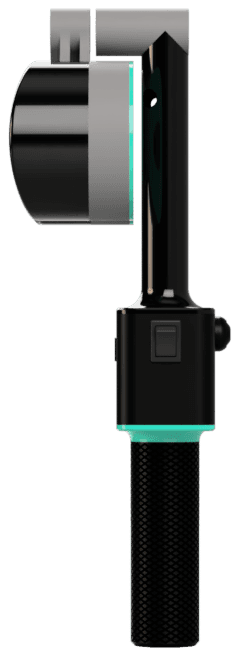
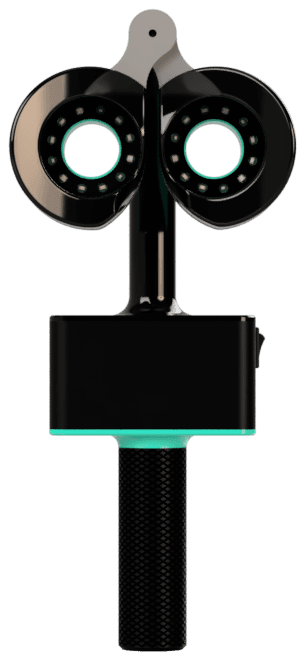
Revolux
Revolux is a binocular photobiomodulation system that actively stimulates compromised retinal cells and supports their repair, helping to preserve central vision in early and intermediate dry macular degeneration.
Each session takes five minutes. It fits a standard consulting room, needs no dedicated infrastructure, and turns an unmet patient need into a structured, evidence-led clinical pathway.
Intervene when it matters most, in the years before irreversible vision loss occurs.
A portable binocular design that fits standard consulting rooms. No dedicated space, no fixed installation.
Unlike desktop systems, Revolux guarantees exact source-to-eye geometry for every patient, every time.
For optometrists and ophthalmologists
Revolux integrates active dry AMD intervention into the workflows you already run, turning an unmet patient need into a scalable, high-value clinical service.
Bespoke treatment protocols optimise retinal stimulation beyond generic or fixed photobiomodulation.
Repeatable treatment cycles generate sustainable recurring revenue that scales linearly with patient volume.
Therapy slots into existing clinical workflows without dedicated space or fixed infrastructure.
Integrated software simplifies clinical reporting and supports decisions, reducing administrative burden.
Continuous care models replace passive management, keeping patients engaged with therapy over time.
A low-friction subscription model eliminates high upfront costs, so the service is profitable from the start.
Development roadmap
Medical device development is a disciplined journey of risk reduction. Each stage below locks something down before the next begins.
Confirmed that the science of photobiomodulation is sound, and that existing delivery methods fail community use: handheld devices lack consistency, hospital consoles lack accessibility.
A headset-based architecture chosen to guarantee precise source-to-eye geometry and repeatable dosimetry, so every patient receives the intended dose whichever clinic they visit.
Functional prototypes fabricated with Med Design validated the ergonomic assumptions for adults over 50. Thermal limits, output stability and software logic tested.
Locking the hardware configuration: optical arrays, power subsystems and safety interlocks, under ISO 13485 quality standards, with optical engineering input from Fraunhofer and WideBlue.
Revolux moves out of the lab and into the hands of clinicians: the final step before scaling for regulatory approval.
Class IIa conformity under the EU MDR, then UKCA for the UK market, with third-party testing against the optical, electrical and biocompatibility standards.
Subscription rollout to community optometry, with clinician training, integrated reporting and post-market surveillance.

Leadership
Adail is an optometrist and orthoptist with extensive clinical experience managing macular disease across both hospital ophthalmology pathways and community optometry settings.
His direct experience on the front lines of eye care revealed the limitations of existing treatments: hospital-bound technologies could not scale to meet the needs of the millions of patients managed in primary care. Adail founded BioPhotonix to engineer a solution that fits the reality of clinical practice: a device that is clinically rigorous, regulator-ready, and accessible enough to be deployed in every community clinic.
Latest insights
6 February 2026 · 3 min
Around 200 million people live with AMD today, and 85 to 90% of them have the dry form. For decades the innovation has gone to the other 10%.
6 February 2026 · 3 min
There is a clear line between consumer wellness gadgets and regulated medical devices. We have chosen our side of it with absolute clarity.
6 February 2026 · 3 min
As an optometrist and orthoptist, the hardest part of a dry AMD diagnosis was never the diagnosis. It was the conversation that followed.
Get in touch
Whether you run a practice, treat retinal disease in hospital, or are looking at the company as an investor, we would like to hear from you.